On the trail of St Kenelm, saint and boy king
English myths and legends leave breadcrumbs throughout history. Little references in popular culture. When it comes to things 1200+ years ago, even some of those references can be pretty damn ancient. This one is even referenced by the great Middle English writer Chaucer;
In ‘The Nuns Priests Tale’ by Chaucer.
Lo, in the lyf of Seint Kenelm I rede,
Lo, I read in the life of Saint Kenelm,
That was Kenulphus sone, the noble kyng
That was son of Kenulphus, the noble king
Of Mercenrike, how Kenelm mette a thyng.
Of Mercia, how Kenelm dreamed a thing.
A lite er he was mordred, on a day,
A little before he was murdered, on a day,
His mordre in his avysioun he say.
He saw his murder in his vision.
His norice hym expowned every deel
His nurse completely explained to him
His sweven, and bad hym for to kepe hym weel
His dream, and ordered him to guard himself well
For traisoun; but he nas but seven yeer oold,
From treason; but he was only seven years old,
Saint Kenelm (or merely Kenelm at the time) was, as the poem suggests, the son of Kenulphus (from the latin Coenulfus, but more likely known in English as Coenwulf) an Anglo Saxon king of the kingdom of Mercia. His 7 year old (or 9 or 12 depending on what you read) son Kenelm was indeed murdered which set off the events (legend would have it) leading to his canonisation.
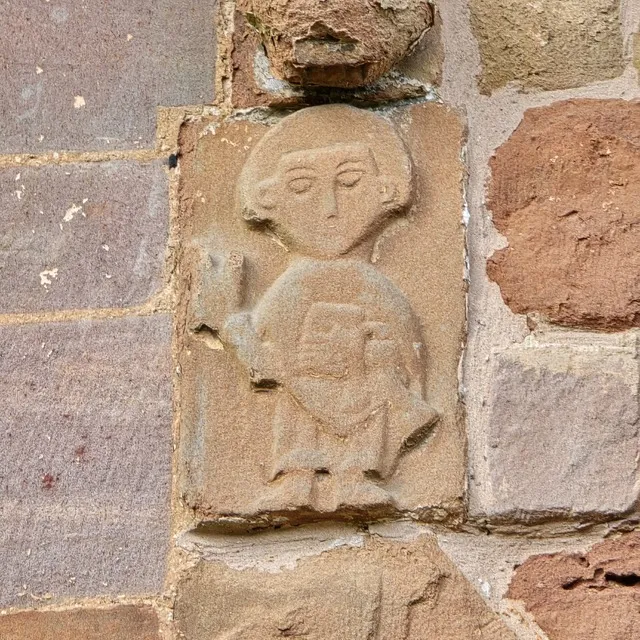
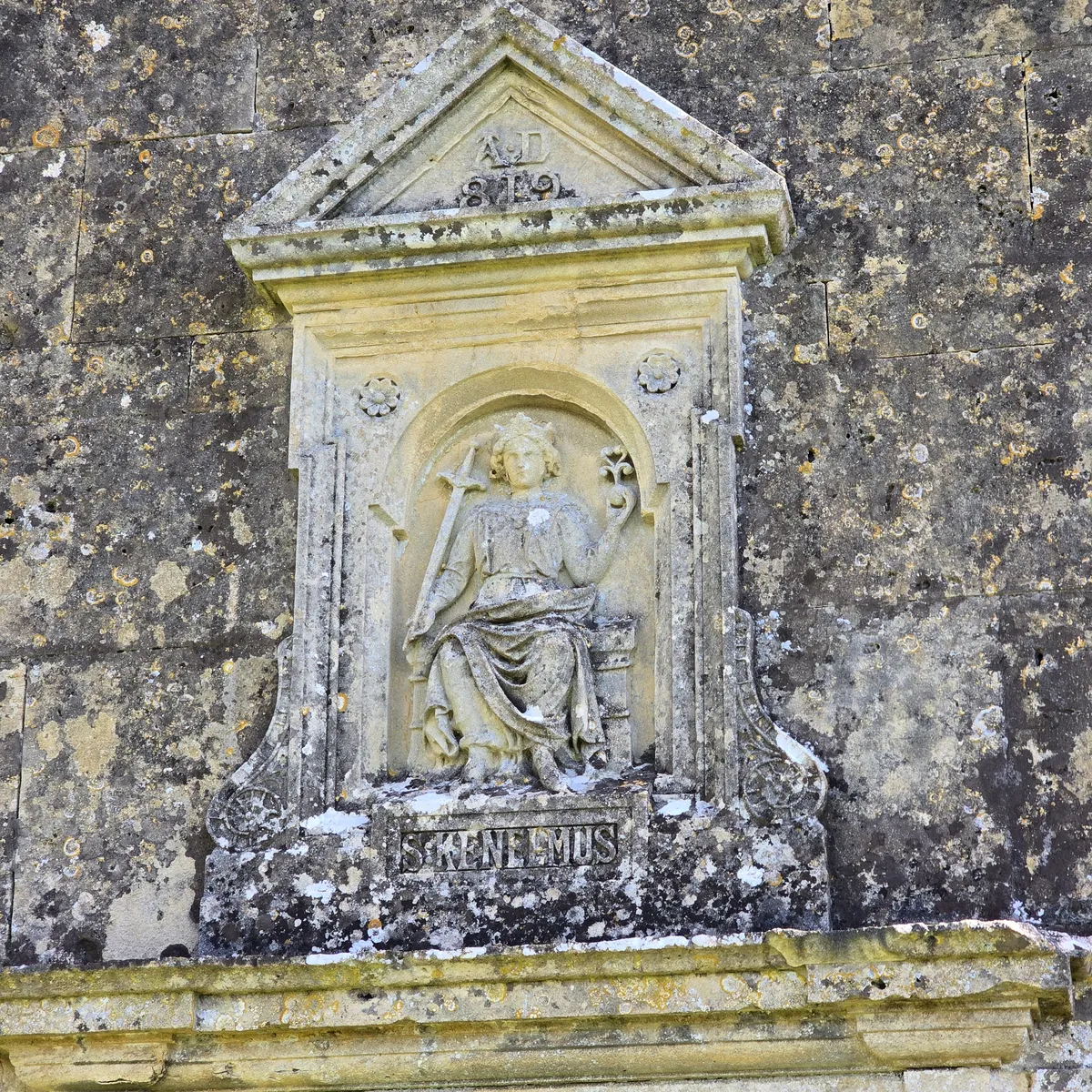
Carving assumed to be St Kenelm on the Church of St Kenelm Romsley
The legend goes, Kenelm was a boy king who succeeded his father instead of his two sisters, Quendryda and Burgenhilda. Quendryda was said to be deeply envious of her brother and conspired with her brother's tutor Askobert (whom she may have been shagging) to have him killed. As Chaucer suggests, the boy king prophesied his murder in a dream translated by his nanny/nurse. Despite this or perhaps being 7 given no choice in the matter, he set out on a hunting trip from the family home in Winchcombe (now Gloucestershire) to the foot of the Clent hills in Worcestershire.
As he lay to sleep, Askoert started to dig a grave in order to bury the boy, who then awoke and declared he would not die in this spot but instead in a spot where his walking stick would blossom. Translations and telling vary, but they then went to a different spot where the stick was thrust into the ground, developed roots and grew into an ash tree ‘St Kenelms Ash’ It was here that Askobert cut off the boy's head and buried him. Either at this point, or sometime later as Quendra was presumably ruling happily and denying all knowledge of knowing what happened to her younger sibling, a white dove flew into St Peter Basilica in Rome carrying a message. “In Clent, in Cowbach, Kenelm, Kinges bermn (bairn) lieth under a thorn heuade birevede (bereft of his head).” Now, I do love the suggestion in some tellings of this, that the dove had helpfully provided the message above in old English, which this being Rome no-one could read. So the Pope and his colleagues had to send out or otherwise find a translator (whilst shrugging in an Italian fashion) who was able to convey the message to them. In any case, the Pope got in touch with the Archbishop of Canterbury to dispatch some bishops and go find the body of the boy king. This they did, to what is now just outside of the modern village of Romsley (about 5 minutes from where the author grew up).
When they reached the area, they saw a pillar of light shining over a thicket and marking the location of the body. These days Romsley is more likely to be marked by headlights of a BMW heading back to some rather nice houses (I’m just jealous the one I wanted cheap got purchased by a developer). Regardless of its modern failings, as the body was lifted, a spring of water began to flow and this is the site of the first Holy well of this story.
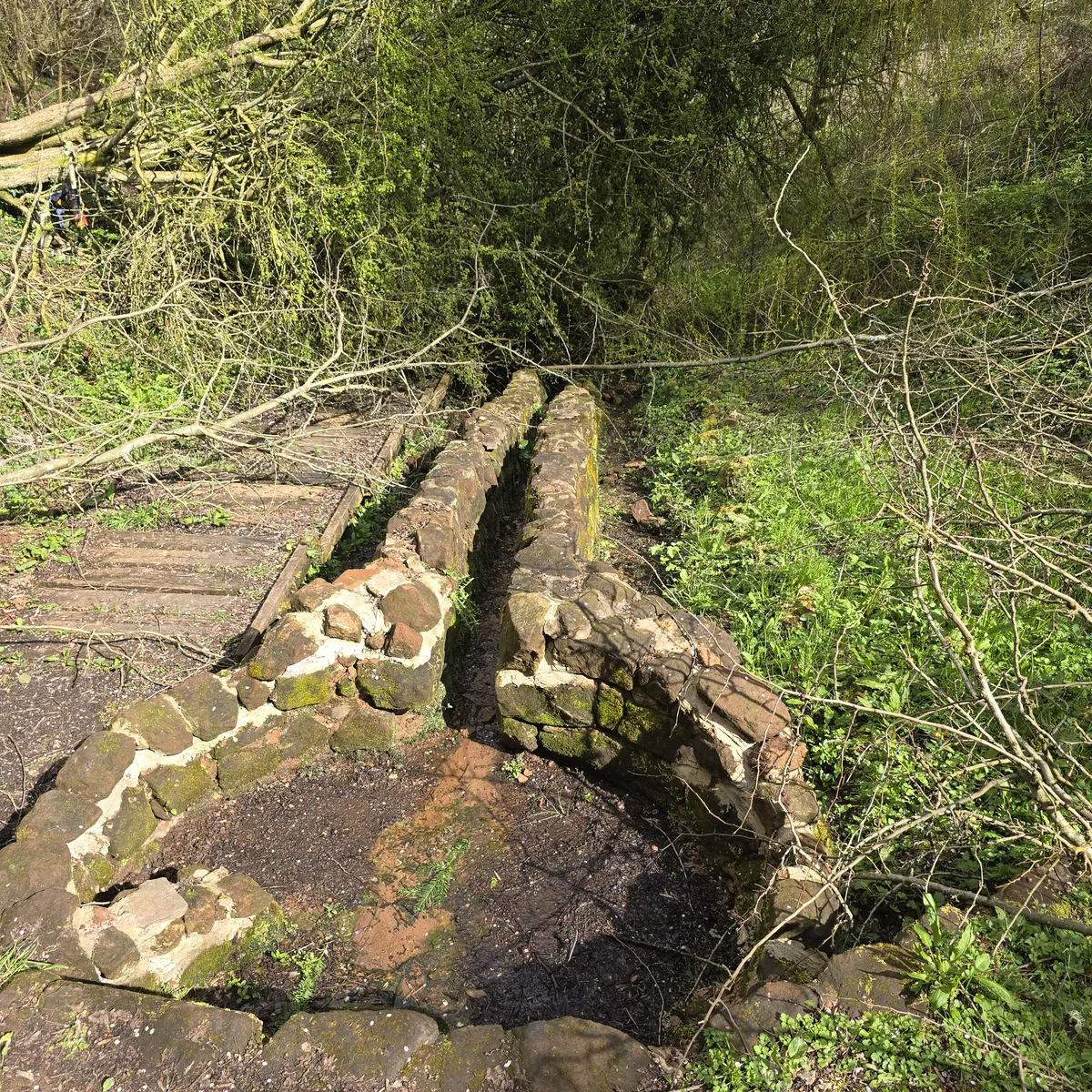
Sometime after, a Chapel of St. Kenelm at Romsley was built beside the spring and a church still remains at or close to the spot of the well. The well itself is now marked with an modern stone wellhead and channel running down to an ugly well head provided by the local Lord. The original well is supposed to be down behind the bricked off doorway on the east side of the church.
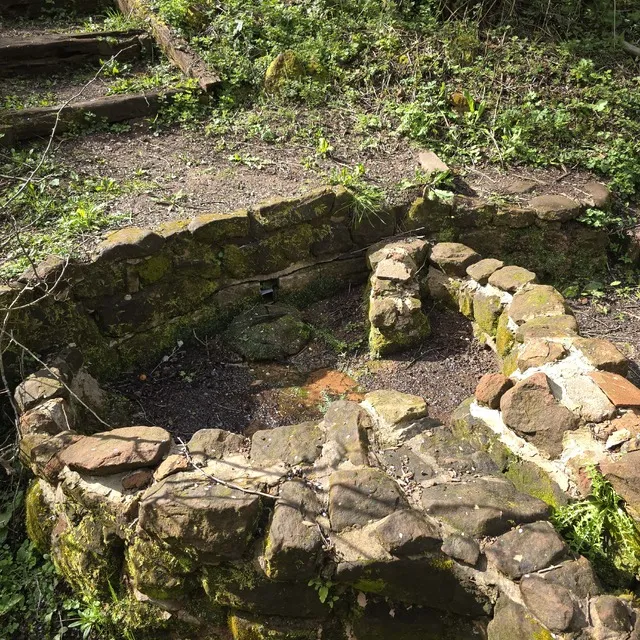
Modern stone well head and channel
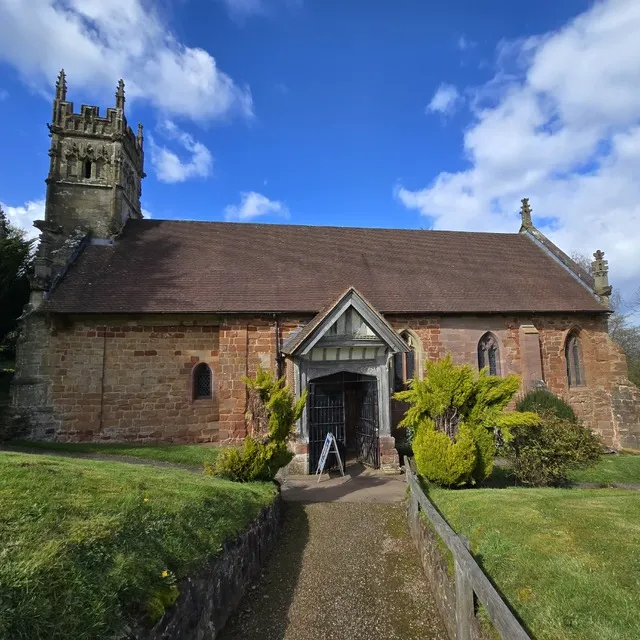
Church of St Kenelm
Part 2.
The monks having recovered the body of Kenelm then began to carry the body or the remains back to the family seat in Winchcombe. However, given the holy nature of the body, at some point they quarrelled with monks from Worcester cathedral who decided that given its location they had the stronger claim to the remains. It was decided that the holy brothers would go to sleep and whoever awoke first could carry off the body. The Winchcombe monks set their alarms the earliest and continued to bear the body towards Winchcombe abbey. In some versions of the telling they continued to be pursued by the angry Worcestershire monks. Regardless, they stopped and rested on a hill about a mile outside of Winchcombe and laid the body of Kenelm on the earth. It was here that again a holy well was to spring forth.. Today the well is inside a well house dating from 1572 and restored by the Victorians.
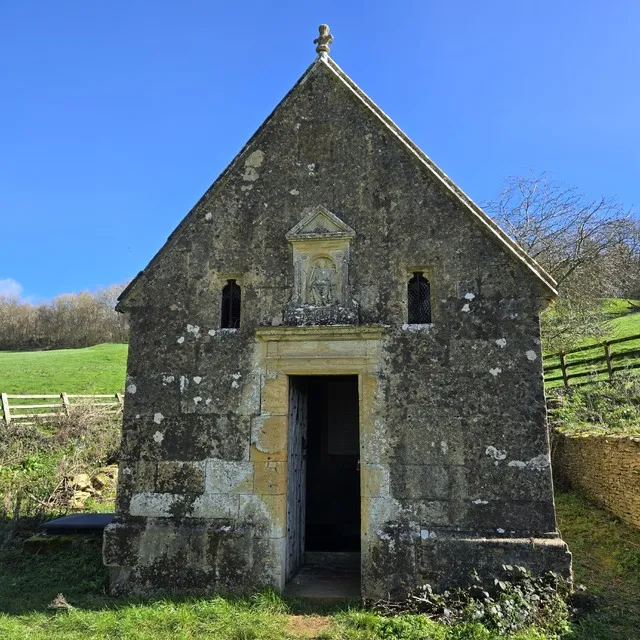
1572 Well House of St Kenelm - near Winchcombe
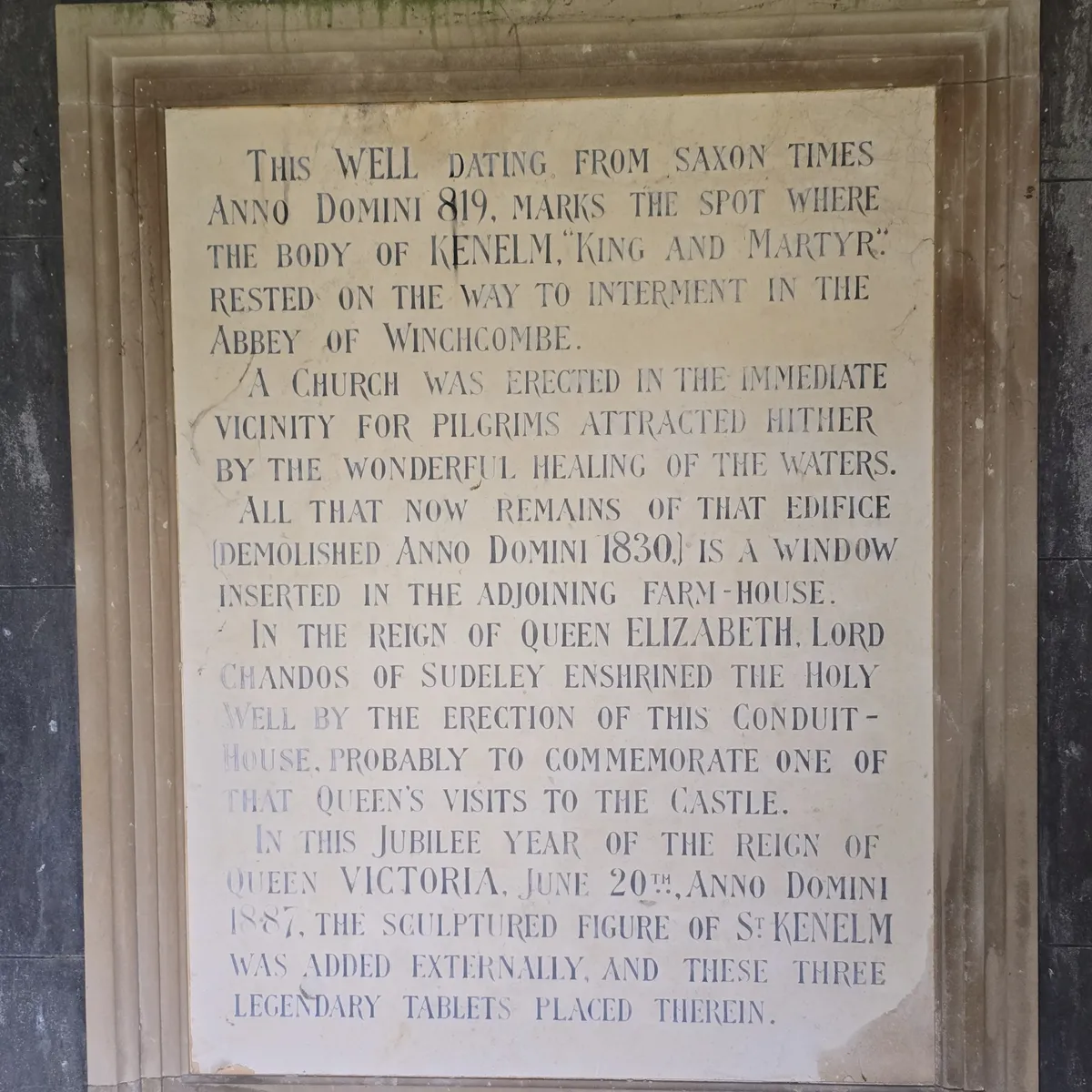
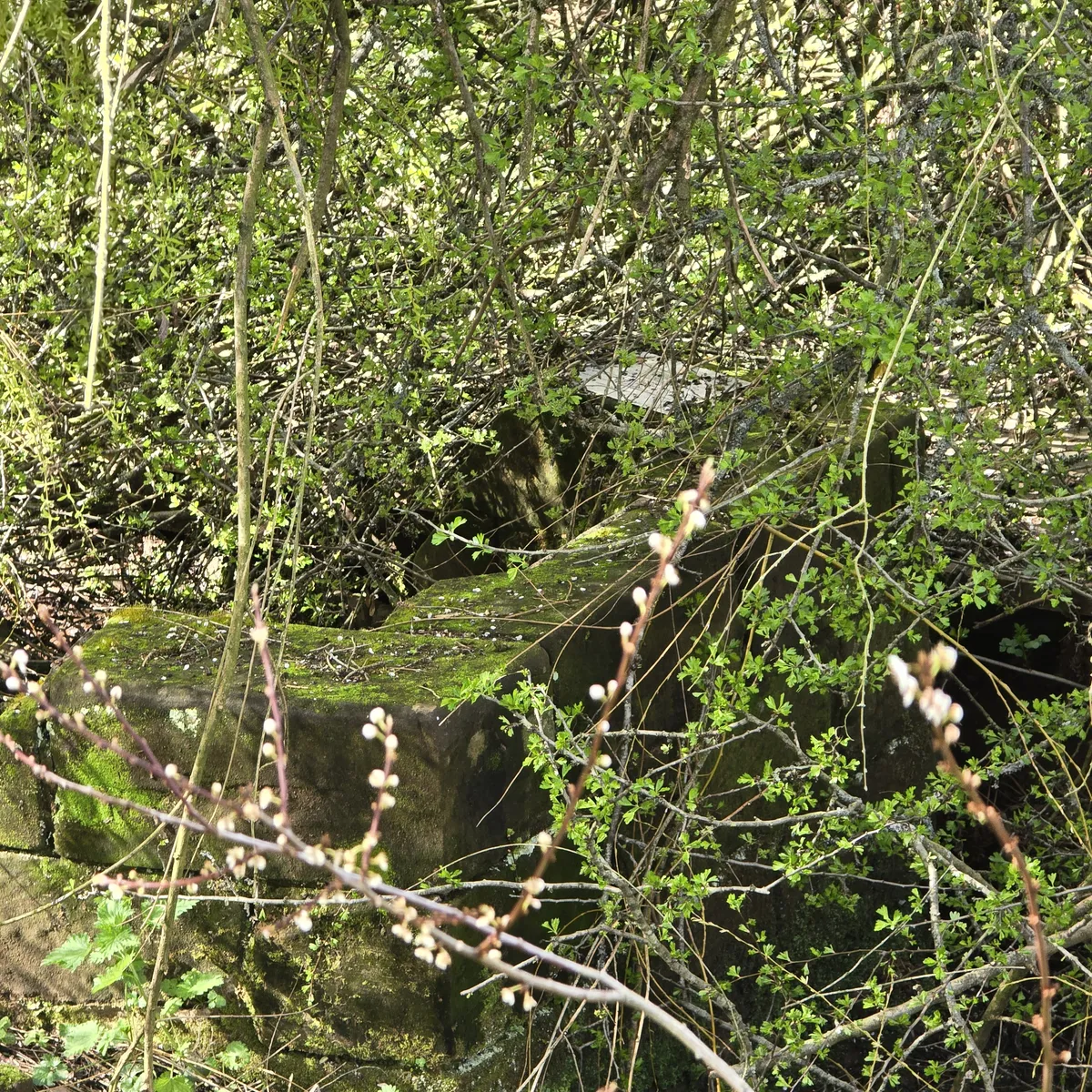
A inlay stone on the wall invites all to “drink of this water, pure and sweet”. I can’t comment on that, as when I visited there was a dead rabbit next to the water so I wasn't about to go anywhere near it! The location as you’d expect given the area is rather lovely and I do question what appears to be a small standing stone next to the building. Possibly remains of the original church or evidence of an even more ancient pagan site, it's only just visible in the weeds.
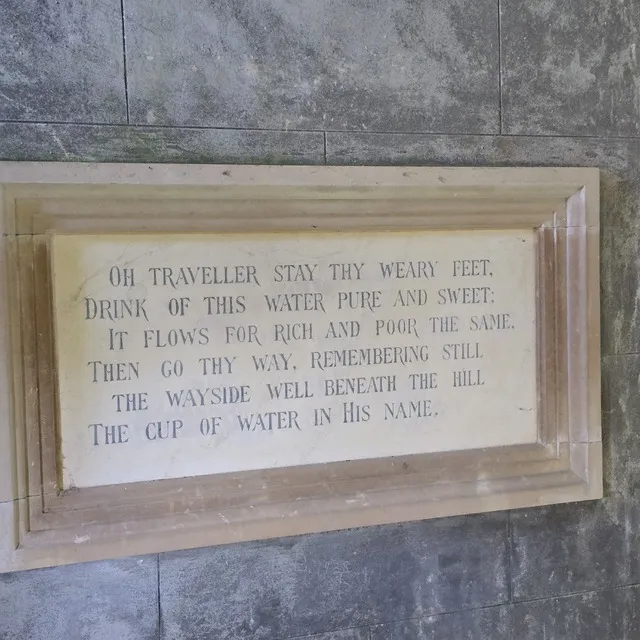
Inlay stone inviting all to drink
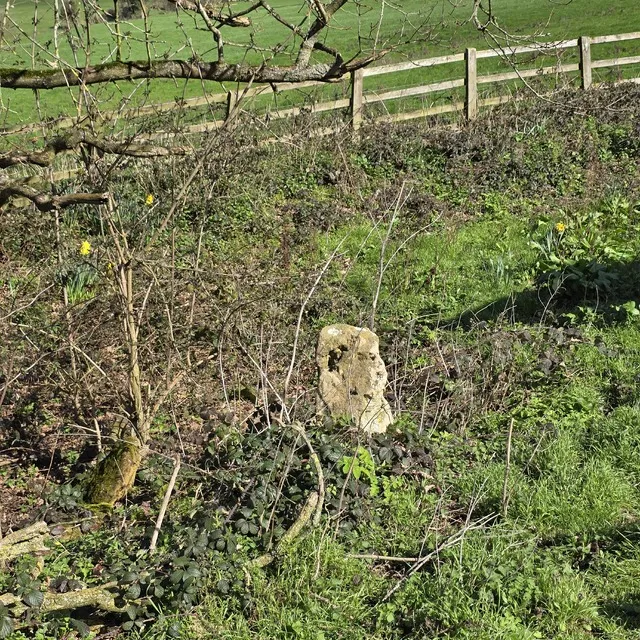
Possible small standing stone
So what of St Kenelm? Here I don’t think my writing can match that of the mediaeval author of ‘The Golden Legend’ Jacobus de Varagine;
“And the monks received it with procession solemnly, and brought it into the abbey with great reverence, joy and mirth, and the bells sounded and were rung without man’s hand. And then the queen Quendred demanded what all this ringing meant. And they told her how her brother Kenelm was brought with procession into the abbey, and that the bells rung without man’ s help. And then she said, in secret scorn: That is as true, said she, as both my eyes fall upon this book, and anon both her eyes fell out of her head upon the book. And yet it is seen on this day where they fell upon the psalter she read that same time. Deum laudemus. And soon after she died wretchedly, and was cast out into a foul mire, and then after, was this holy body of S. Kenelm laid in an honourable shrine, whereas our Lord showeth daily many a miracle. To whom be given laud and praising, world without end. Amen.”
So a sticky end for the evil sister and Kenelm interred and providing miracles in addition to the healing properties of the holy wells where his body had rested. Pilgrims presumably coming from far and wide.
Whilst this is all legend and what we do know of the real Kenelm contradicts a lot of the story, I rather like this version. It has holy waters, angry monks and a confused Pope. It's probably an amalgamation of medieval stories combined with the good people of Winchcombe and Halesowen (both sites of pre-reformation abbeys) making money from pilgrims visiting the Holy waters and wanting to see the relics of the boy king at Winchcombe. Both areas are worth a walk, to stand in the footsteps of history (as ever on this blog). I started with a poem so I’ll end with the final words of one from the now less than famous Halesowen author Francis Brett Young;
But the king's lords buried little Kenelm
With pomp in Winchcombe's fane,
And built a chantry for pilgrim-folk
By the brook where he was slain;
And the waters that well from where he fell
All mortal ills assuage
Not even Saint Thomas of Canterbury
Hath greater pilgrimage
Than the innocent king of Mercia
That his sister's leman slew
And hid in the brash of oak and ash,
hazel and holly and yew!
Wistan, Wulstan, Oswald, Chad:
All pray for Mercia's realm;
But our loveliest saint was a little lad:
King Kynewulf's son, Kenelm.